
The Complete Guide to Breathwork: Types, Benefits and How to Know Which One Is Right for You

Most people breathe around 20,000 times a day without thinking about it once.
And yet the breath this thing we do constantly, automatically, without any instruction turns out to be one of the most powerful tools available to us. One that can shift how we feel, influence our nervous system and give us access to experiences that talking and thinking alone may not always reach.
The ancient yogis knew the breath was powerful thousands of years ago. Modern research is now helping us understand more about why intentional breathing can have such a profound effect.
If you have been curious about breathwork, heard someone mention it, seen it appearing in your social media feed, or wondered whether it might support you with anxiety, your energy, emotional blocks or your general sense of feeling stuck, this guide is for you.
Because breathwork is not one thing. It is a family of practices that range from gentle and calming to deeply activating and transformational. Understanding what each type does and who it is for will help you find the one that meets you where you actually are.
First — What Actually Makes Breathwork Therapeutic?

Before we get into the different types, it helps to understand why intentional breathing can have such a noticeable effect at all.
Your breath is unusual among your body's automatic functions because it happens automatically, but you can also consciously control it. This makes it a direct bridge between your conscious awareness and your autonomic nervous system. The system involved in regulating your stress response, heart rate, digestion and many other automatic processes.
When you breathe in specific patterns, you can influence your physiological state. Slow, controlled breathing can encourage parasympathetic activity and a calmer state. Faster, more activating breathing patterns can stimulate the body and alter the chemistry of your blood in ways that can shift your experience and create conditions where emotional release may occur.
Different breathing patterns also alter levels of oxygen and carbon dioxide in your blood which can change blood pH, influence brain activity and contribute to experiences ranging from deep calm to vivid inner states.
This is why breathwork can feel so different from talking about your feelings or thinking through your challenges. It can help quieten the constant analysis of the rational mind and bring more attention into the body, sensations, emotions and inner experience.
Now let us look at the main types.

1. Pranayama — The Ancient Foundation
Origin: Ancient India. Thousands of years old. Embedded in the yogic tradition.
What it is: Pranayama — from the Sanskrit prana (life force) and ayama (extension or control) is the original breathwork. A vast system of conscious breathing techniques developed over millennia as part of the yogic path to expanded consciousness and physical health.
There are dozens of specific Pranayama techniques, each with its own effect:
Nadi Shodhana (alternate nostril breathing) — traditionally associated with balance and calm. The alternating pattern slows the breath, requires focused attention and may support relaxation and concentration.
Kapalabhati (skull shining breath) — rapid, forceful exhales with passive inhales. Traditionally used as an energising and cleansing practice. It warms the body and creates a much more activating experience than slower Pranayama techniques.
Bhramari (humming bee breath) — slow inhales followed by long, humming exhales. The combination of slow breathing, prolonged exhalation and vibration can create a powerful sense of calm and is often used as part of relaxation and meditation practices.
Ujjayi (victorious breath) — a gentle constriction at the back of the throat creates an ocean like sound on both the inhale and exhale. Used throughout yoga practice, it extends the breath and anchors attention, helping many people feel calmer and more focused.
Best for: People who want to begin a daily breathing practice, support stress management, improve focus, or deepen a meditation or yoga practice. Pranayama is accessible and can be practised almost anywhere.
The limitation: Pranayama generally works at the level of the conscious and relaxed mind. It is regulatory and balancing. It is not typically used for deep emotional processing or accessing subconscious material in the way some of the more activating types of breathwork are.
2. Box Breathing — The Simplest Tool You Already Have
Origin: Used in high pressure environments, including the US military, for stress and performance regulation. It is now widely used as a simple controlled breathing practice.
What it is: Four seconds in, hold four seconds, four seconds out, hold four seconds. Repeat.
That is it.
Deceptively simple.
Box breathing gives the mind a structured rhythm to follow while deliberately slowing and controlling the breath.
The counting also gives a busy mind somewhere else to place its attention.
Research into controlled and slow breathing has found promising effects on stress, heart rate variability, emotional regulation and subjective anxiety.
Best for: Everyday stress management. Pre performance nerves. Winding down. Racing thoughts. People who need a simple, reliable tool they can use anywhere.
In a meeting, before a difficult conversation, during a hard training session or in the small hours of the morning when their mind will not settle.
The limitation: Box breathing is primarily a regulation tool rather than a deep emotional processing technique. It generally does not create the kind of inner journey that more activating forms of breathwork can produce.
Think of it as a remote control for your state. Something you can reach for when you need to interrupt what is happening in the moment.
3. Coherent Breathing — A Gentle Nervous System Reset
Origin: Developed from research into slow breathing, resonance frequency and heart rate variability. Popularised by a number of researchers, clinicians and authors.
What it is: Breathing at a rate of approximately five to six breaths per minute. Often around five seconds in and five seconds out.
This rhythm has been studied extensively in relation to heart rate variability.
Heart rate variability, or HRV, describes the variation in time between heartbeats. It is influenced by breathing as well as age, fitness, sleep, stress, health and many other factors.
Slow breathing around five to six breaths per minute can produce measurable changes in HRV and cardiovascular regulation.
Research into slow and coherent breathing is also exploring its potential role in supporting stress regulation, emotional wellbeing and resilience.
Best for: People experiencing ongoing stress or feeling burnt out. People wanting a gentle daily practice and those who want to improve their awareness of their breathing and nervous system state. It can be particularly useful alongside other therapeutic approaches.
The limitation: Coherent breathing is restorative and regulatory but gentle in its effects. Its benefits are generally associated with consistent practice rather than trying to produce a dramatic shift in a single session.
4. The Wim Hof Method — Cold, Breath and Mental Resilience
Origin: Developed by Dutch athlete Wim Hof ("The Iceman") over several decades of extreme cold exposure and breathwork experimentation.
What it is:A three component method combining a specific breathing technique, cold exposure and commitment or focus practice.
The breathing technique involves repeated full inhales and relaxed exhales followed by breath retention and a recovery breath.
This creates significant changes in breathing physiology, particularly carbon dioxide levels and blood pH, and can produce experiences ranging from light headedness and tingling to euphoria and altered states of consciousness.
One well known controlled study involving people trained in the Wim Hof Method found that participants were able to influence aspects of their physiological response during an experimental endotoxin challenge.
It was a fascinating finding and helped generate further interest in the relationship between breathing, stress physiology and immune activity.
Best for: People who want to build mental and physical resilience. Those interested in cold exposure and performance optimisation. People who enjoy challenging their perceived limits and building confidence.
The limitation: The method involves deliberate intensive breathing and should never be practised in or near water, while driving or anywhere becoming light headed or losing consciousness could cause injury. It is activating rather than deeply emotionally therapeutic. Excellent for exploring resilience but not typically used for the same kind of deep inner work that other breathwork methods target.
5. Holotropic Breathwork — Deep Therapeutic and Spiritual Breathwork
Origin: Developed in the 1970s by psychiatrist Stanislav Grof and his wife Christina Grof following Grof's earlier research into altered states of consciousness.
What it is: Extended sessions, typically two to three hours, of faster than normal connected breathing — inhaling and exhaling continuously without a pause — while lying down, with evocative music playing throughout.
Sessions are facilitated by a trained practitioner and are often conducted in a carefully prepared setting.
The sustained connected breathing changes breathing physiology and can contribute to non ordinary states of consciousness.
Experiences during Holotropic Breathwork can include vivid imagery, deep emotional release, feelings of death and rebirth, encounters with archetypal figures, experiences of expanded consciousness, memories from early life or even birth and profound insights about one's life.
Grof documented thousands of sessions and categorised the types of experiences that arose, developing a comprehensive framework for understanding these extraordinary inner experiences.
Best for: Deep emotional and spiritual work. People drawn to exploring non ordinary states of consciousness, inner experience and the deeper dimensions of themselves.
The limitation: Holotropic Breathwork is long, intense and requires a carefully prepared setting and trained facilitator. The experiences can be profound and sometimes disorienting. It is not a beginning practice and is not suitable for everyone.
6. Transformational Breath — Integration and Joy
Origin: Developed by Dr Judith Kravitz in the 1970s drawing on Rebirthing, Pranayama and body based approaches.
What it is: A connected breathing technique similar to Holotropic breathing, combined with sound, movement, body mapping and integration coaching.
Within the Transformational Breath approach, practitioners observe an individual's breathing pattern — including areas where the breath appears restricted or absent — and explore how those patterns may relate to tension, emotional holding or patterns in the person's life.
Sessions use specific techniques intended to open the breath more fully, addressing areas of restriction through the chest, belly and back while the facilitator may use touch, movement prompts and coaching.
The philosophy is that a fuller connected breath is our natural state and that restrictions in our breathing may reflect ways we have learned to hold back physically, emotionally or in our lives.
Best for: People who want to combine breathwork with body based exploration. Those who have restricted breathing patterns and are curious about what those patterns may represent. People drawn to a gentle but deeply integrated approach to emotional work.
The limitation: Effective Transformational Breath work depends heavily on the skill and sensitivity of the facilitator. Session quality can vary significantly.
7. Rebirthing Breathwork — The Original Connected Breathing
Origin: Developed by Leonard Orr in the 1970s. The foundation from which several modern breathwork modalities developed.
What it is: Continuous connected breathing — inhale and exhale without any deliberate pause — sustained for an extended period.
The premise within Rebirthing Breathwork is that this breathing pattern can bring the individual into contact with deeper emotional and subconscious material, including experiences from earlier life, allowing whatever arises to be consciously experienced and integrated.
Historically, the approach has also placed significance on the birth experience itself.
Rebirthing is typically practised lying down, although some traditional approaches have incorporated warm water.
The continuous circular breath may be maintained for an extended period, allowing thoughts, sensations, emotions, memories, energetic experiences or spiritual experiences to arise.
Best for:People doing deep inner work who are willing to engage with strong emotional experiences in a safe and supported setting.
8. 9D Breathwork — An Advanced Immersive Breathwork Experience
Origin: Developed by Brian Kelly in Bali in 2025. It combines somatic breathwork with nine dimensions of engineered immersive sound.
What it is: This is where everything described above — connected breathing, altered states of awareness and emotional exploration — is combined with nine simultaneous layers of sound and guided audio delivered through headphones.
Those nine dimensions are:
Somatic Breathwork— the connected breathing technique that forms the physiological foundation.
Binaural Beats— different frequencies presented to each ear, used as part of the immersive soundscape and often associated with relaxation, meditation and altered states of awareness.
Solfeggio Frequencies — ancient tonal frequencies used within many sound, spiritual and wellness practices and associated by practitioners with emotional and energetic experiences.
Isochronic Brainwave Tones — rhythmic audio pulses incorporated into the journey to support the immersive experience.
Guided Vocal Coaching — spoken guidance woven throughout the journey.
Subliminal Hypnotic Therapy — hypnotic suggestions layered into the audio experience.
Bioacoustic Sound Effects — spatial sound design creating a fully immersive three dimensional experience.
432Hz Music — music tuned to 432Hz, a frequency commonly used within meditation, sound and wellness practices.
Somatic Release Techniques — specific breath holds and release sequences at strategic moments.
The result is a session that simultaneously engages the body through the breath, the nervous system through sustained connected breathing and the mind through sound, focused attention, hypnotic elements and guided language.
What Makes Theta State Significant?
Theta brainwave activity is associated with deeply relaxed states, the transition towards sleep, meditation and some hypnotic states.
Within 9D Breathwork, binaural and rhythmic audio techniques are used with the intention of supporting a more inward, deeply relaxed and receptive experience.
In normal waking life, our conscious analytical mind can act like a constant filter.
Why am I doing this?
What does this mean?
What if?
What should I do?
During an immersive breathwork journey, the combination of connected breathing, sound and guided language can help turn down some of that constant conscious analysis.
This can create space for emotions, memories, beliefs, patterns and subconscious material to arise in a very different way from ordinary thinking or conversation.
This is why some people describe 9D Breathwork as reaching places within themselves that talking and analysing alone had not reached.
Not because other approaches failed — but because breathwork offers a different way of working with the mind and body simultaneously.
Best for: From complete beginners to experienced breathwork practitioners. For beginners, the layers of sound and guidance mean you are supported throughout the experience. For experienced practitioners, 9D provides another way of exploring the depth available through connected breathing.
People may be drawn to 9D Breathwork for emotional exploration, personal growth, recurring patterns, self worth, grief, feeling stuck despite doing the work, spiritual exploration, or simply wanting to experience a deeper and more immersive form of breathwork.
So Which Type Is Right For You?
Here is a simple guide:
If you want something to support everyday stress or a racing mind: Start with box breathing or coherent breathing. Learn one of these techniques and use it consistently.
If you have a yoga or meditation practice and want to deepen it: Pranayama is your natural next step. Work with a teacher to learn the techniques appropriate for your level.
If you want to build physical resilience, explore cold exposure and push your mental limits: The Wim Hof Method. Learn the method properly, progress gradually with the cold exposure and respect the safety precautions.
If you are ready for deep emotional and spiritual work and want an intensive experience: Holotropic Breathwork or Transformational Breath, with a qualified and experienced facilitator.
**If you want a comprehensive immersive breathwork experience combining connected breathing with multiple layers of sound, hypnotic elements and guided coaching — creating an experience that works with the body, nervous system, attention and subconscious patterns simultaneously:** 9D Breathwork.
And if you are on the Sunshine Coast — or anywhere in the world via an online session — we would love to introduce you to it.
What You Can Expect From Your First 9D Breathwork Session at Breathe & Connect

Sessions run for approximately two hours — including arrival, intention setting, the breathwork journey and integration time.
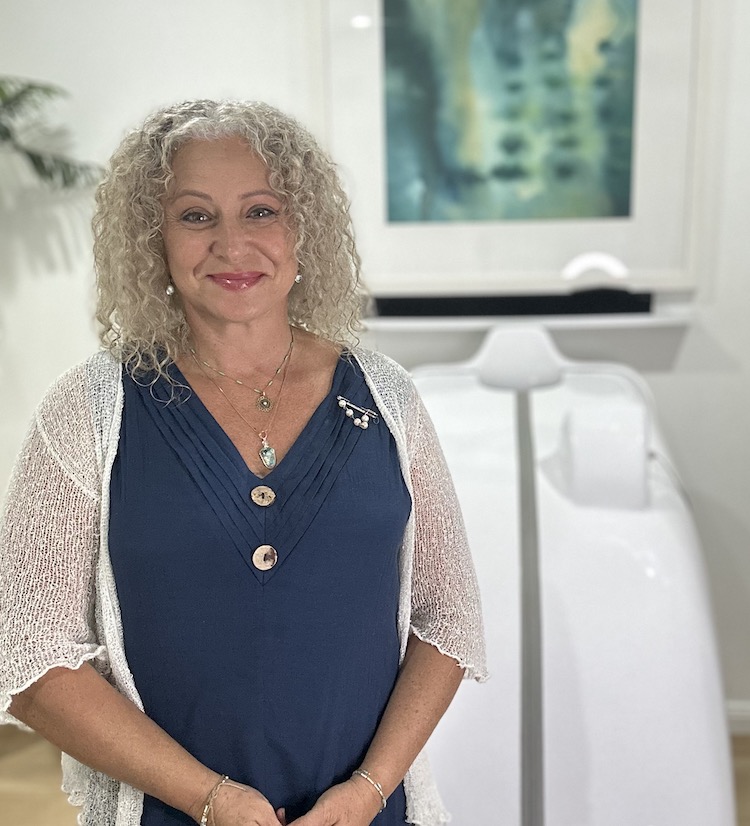
You will be guided by Cassy Dickerson — a Certified 9D Breathwork Facilitator with over five years of experience and a background in psychotherapy and hypnotherapy.
You will be fully supported throughout.
There is nothing you need to do except breathe.
Sessions are available in our studio in Little Mountain on the Sunshine Coast and online worldwide via Zoom.
All you need for an online session is a comfortable space, a good set of over ear headphones and a willingness to show up for yourself.
Book a session or a free 15 minute consultation via the link below.
We cannot wait to introduce you to what your breath can do. 🌿
Cassy Dickerson is a Certified 9D Breathwork Facilitator, Psychotherapist and Strategic Hypnotherapist and the co founder of Breathe & Connect Wellness Studio in Little Mountain, Sunshine Coast.
Breathe & Connect Wellness Studio · Caloundra / Little Mountain QLD
@breatheandconnect_*


Comments